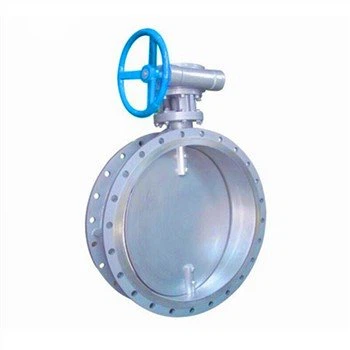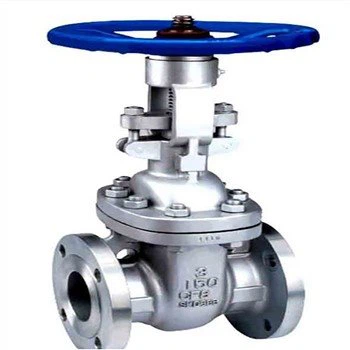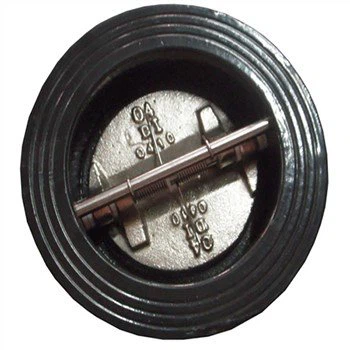
Cost-effective: These valves are often more cost-effective to manufacture and install compared to other types of valves like gate valves or ball valves. They have simpler construction and fewer components, leading to lower initial costs.
Butterfly valves can be operated quickly with a simple 90-degree rotation of the disc, allowing for fast on-off or modulating control.
These valves are well-suited for automation, as they can be easily fitted with actuators for remote or automated control systems.
Centerline flange butterfly valves may not provide the same level of sealing as some other valve types, such as ball valves or gate valves. This could lead to potential leakage issues in high-pressure or critical applications.
While they can be used for flow control, butterfly valves are not as well-suited for precise throttling as some other valve types. This can lead to difficulty in maintaining accurate flow rates.
In applications with high-velocity flows, butterfly valves can experience cavitation and erosion, leading to potential damage over time.
High-temperature applications can pose challenges for butterfly valves, as the materials and design may not be suitable for extreme temperatures.
In summary, centerline flange butterfly valves can offer cost-effective and efficient solutions for various applications with moderate operating conditions. However, their limitations in sealing, throttling, and handling extreme conditions should be carefully considered when selecting them for specific systems. It's essential to match the valve type with the requirements and characteristics of the fluid, pressure, temperature, and overall system conditions.